
How does a virtual sound bath work for a remote team?
A virtual sound bath is a live session over Zoom. Your team joins from wherever they are, ideally on headphones, while two facilitators guide a short meditation and visualization and then play the sound live, in stereo, for about thirty minutes. Cameras stay off, questions go in the chat, and it costs from $500.
Pause + Expand · Updated September 2026
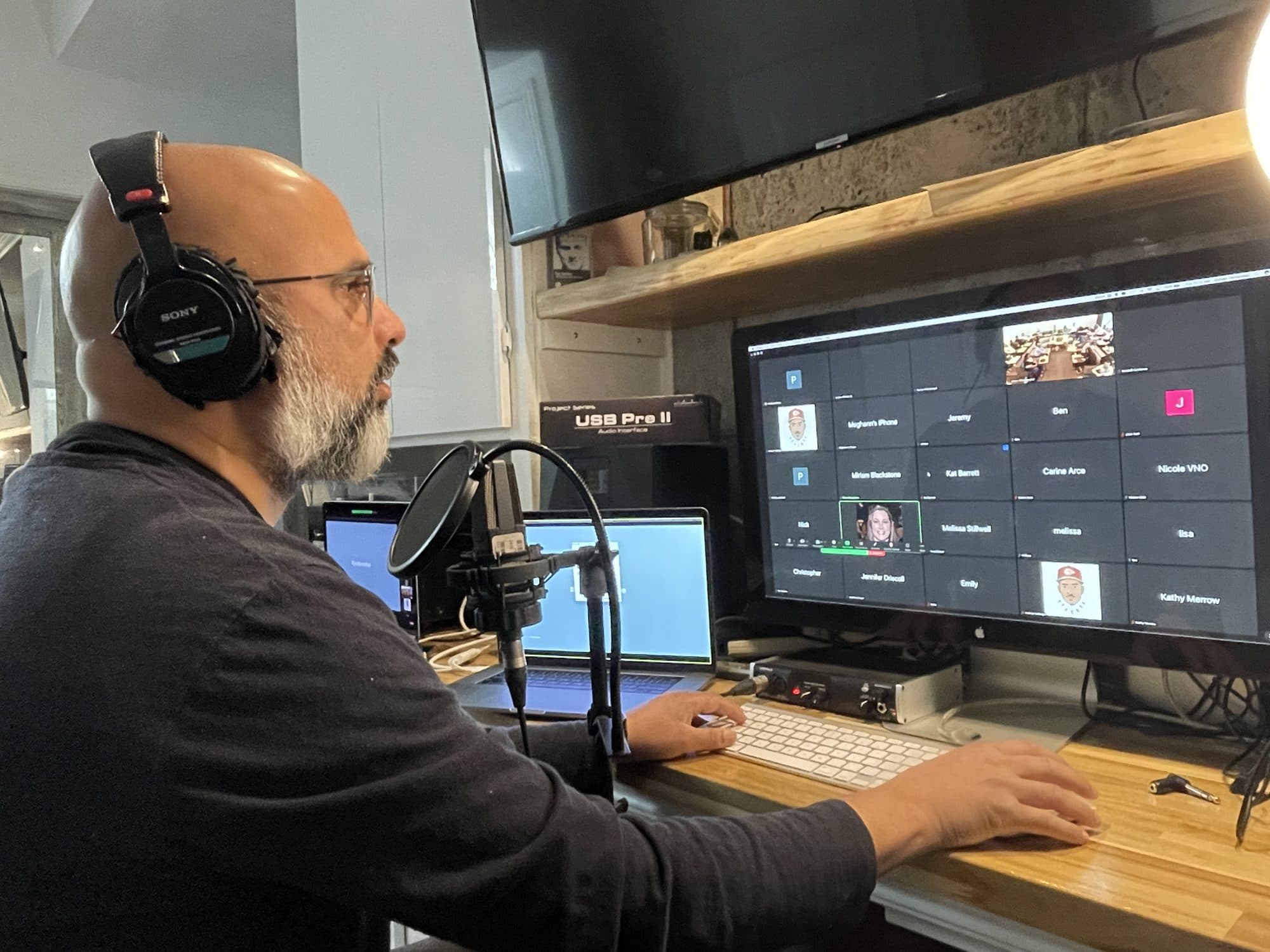
An internet connection. That is the whole list.
We host the Zoom call ourselves and take care of everything technical. Your team clicks a link from wherever they are: a desk, a couch, a parked car between meetings.
Headphones make it better, and we recommend them, but it still works through laptop speakers. We ask people to turn their cameras off, so nobody feels watched.
We captured every bowl so it would survive the internet
A video call flattens everything into one voice in the middle of your head. That is why most virtual sound baths arrive thin and far away.
Steve spent years in music production. We took the painstaking route: we captured the sound of each of our bowls one at a time, with studio microphones placed to hold the whole sound as it fills a room. In a session Steve plays every bowl live from those captured sounds, strike by strike, in stereo, straight to each person's headphones. Nothing is pre-recorded, so no two sessions are the same. What your team hears is the bowls moving around them, as if they were sitting in the middle of them.
Hear it before you book
Our music is on Spotify, made with the same bowls we bring to your team. Put on headphones and play a few minutes of Ascension; that is close to what your team will hear.
The same two people, every time
When you book Pause + Expand, you get Jennifer and Steve. Not a facilitator from a roster, and not a different face each quarter.
We go first: we are open about ourselves at the start, so your team feels safe being open too. Two of us means one leads while the other watches the chat and answers questions as they come in.
Thirty minutes, from hello to back to work
We welcome everyone in and make it feel safe from the first minute. A short explanation of the science, so nobody wonders what they have joined. One of us teaches a simple meditation and visualization. Then the sound comes in and carries the rest.
At the end we bring everyone back gently, and questions keep coming in the chat, answered live.
Virtual was our beginning, not a pivot
In March 2020 nobody was going into an office, and people told us a sound bath would not survive a video call. We tried it anyway, and learned something that is now accepted everywhere: a team, and a community, can be built online.
We have run sessions every week since, for Fortune 100 companies and our own Meditation Club, and Adobe has had a standing weekly session with us since 2022. What we do now is bridge the two worlds: the warmth of a room, live, for a team that is never in one.
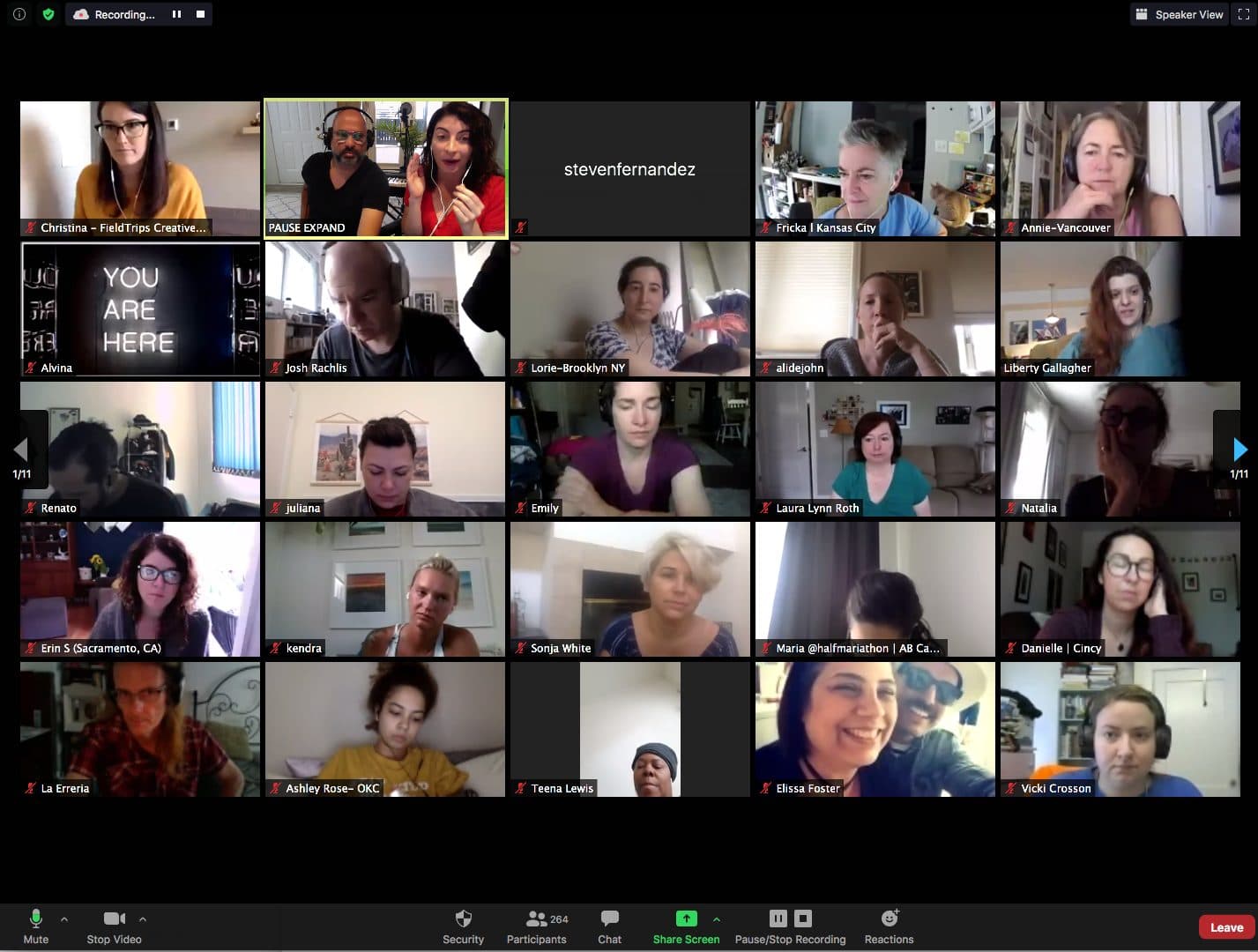
Remote teams are the loneliest
Gallup's 2024 State of the Global Workplace report found that 25% of fully remote employees feel lonely, compared with 16% of people who work on site. A shared half hour, live, with everyone listening at once, is one of the few things a remote team can do together that does not involve a slide deck.
Source: Gallup, 1 in 5 Employees Worldwide Feel Lonely, June 2024
One session, many cities
A remote team rarely does anything at the same moment. A live session changes that: Toronto, London and Vancouver hear the same sound at the same time. There is no limit on how many people or how many cities join.
What it costs
A virtual session starts at $500, whatever the size of the team. Weekly and monthly programmes have a preferred rate.
Also asked
- Can we use Microsoft Teams or Google Meet instead?
- No. Teams and Meet cannot carry the sound we send, so every session runs on Zoom. We host the call, so your team only needs the link.
- What if someone has no headphones?
- It still works through laptop speakers. Headphones are what make the sound surround you.
- Can people who miss it catch up?
- Yes. We can send a recording of the session for anyone who could not make it.
- Does anyone have to speak or be on camera?
- No. Cameras stay off, and anything anyone wants to say goes in the chat.