
How to meditate when your mind won't stop
A mind that won't stop is normal, and it is not a sign you can't meditate. Think of your mind as an operating system. The racing is an error message, not a failure. Notice the thought, come back to your breath or a sound, and do it again. Like a marathon, you build it in small steps, a few minutes at a time.
Pause + Expand · Updated September 2026
The racing mind is the trickster, not the truth
Most people who say they can't meditate have met the same voice. It shows up the moment you sit down: you're doing this wrong, you'll never be good at this, go check your phone. We call it the trickster. It is the part of the mind that tells you that you can't do something, and it is loudest right at the start.
The first step is to stop treating it as proof. A busy mind is not a sign you are bad at meditation. It is the exact thing meditation works with. When the trickster speaks, you do not have to argue with it. You notice it, and you come back.
You are in good company. When Harvard researchers checked in with 2,250 adults through the day, their minds were wandering almost half the time they were awake, whatever they were doing.
Source: Killingsworth and Gilbert, A Wandering Mind Is an Unhappy Mind, Science, 2010
Your mind is an operating system, and the racing is an error message
Think of your mind like the operating system on a computer. It runs old code: habits, worries, the same loops it has run for years. Meditation is how you start to rewrite that code, and every rewrite begins in the same place. You do not panic at the error message. You normalize it, and then you take a deeper look at why it is happening.
So when your mind races, get curious instead of frustrated. What is it running on right now? A deadline, a conversation, a fear about tomorrow? You are not trying to shut the system down. You are learning to read it.
Nobody runs a marathon on the first day
No one runs 26 miles the first time they put on running shoes. They start with a few minutes and build. Meditation works the same way. Your first sessions might be a minute of your mind wandering for every ten seconds of quiet. That is the training. Every time you notice the wander and come back, you have done one rep. Short and often beats long and rare.
No two people run the same, and no two people meditate the same
Watch a group of runners and no two move alike. One lands on her heels, another on his toes. One leans forward, one runs upright. Some take short quick steps, some long easy strides. Some run best at dawn, some after work. And every runner carries their own history: the old knee injury, the years off, the body they were born with. Nobody expects them all to run the same way, so why do we expect everyone to meditate the same way?
Your mind is just as unique as your stride. It carries your personal history: how you grew up, what you have been through, what keeps you up at night. For some people the breath settles them in seconds. For others, focusing on the breath makes them more anxious, and a single bowl tone does it instead. Some people need their hands on their body to feel where they are. Some people sit, some lie down. Some people need to say what is on their mind before they can let it go.
None of these is the right way. The right way is the one that works for you, and you find it the way runners find their stride: by doing it, often, and noticing what helps. Every member of Meditation Club has found their own practice. That is what we help you do.
We give you options, so you can find what works
You cannot find your practice by doing one thing over and over. So every morning we give you more than one way in.
Some mornings open in the body, not the mind. Steve's polyvagal nurturing starts with your hands together, then on your ears, your eyes, your face, your heart and your belly. When the racing is really anxiety, settling the body first is often what lets the mind follow.
From time to time we draw an oracle card and let it set the theme for the morning. It gives a busy mind one thing to hold instead of fifty.
And we visualize the way pro athletes do. A runner goes over the race in their head before the start line. We walk you through a picture, step by step, so your mind has somewhere to go instead of being asked to go blank.
Try them all. Keep what works for you, and leave the rest.
Two teachers, two doors
Steve leads Mondays. He works with the mind and the body: the operating system, the old code, and the nervous system underneath it.
Jennifer Spencer Medium leads Wednesdays. She works with the higher self, with spirit and with energy, and how to bring them into your daily life. Meditation opens a door, and on the other side of it is the life you want to create.
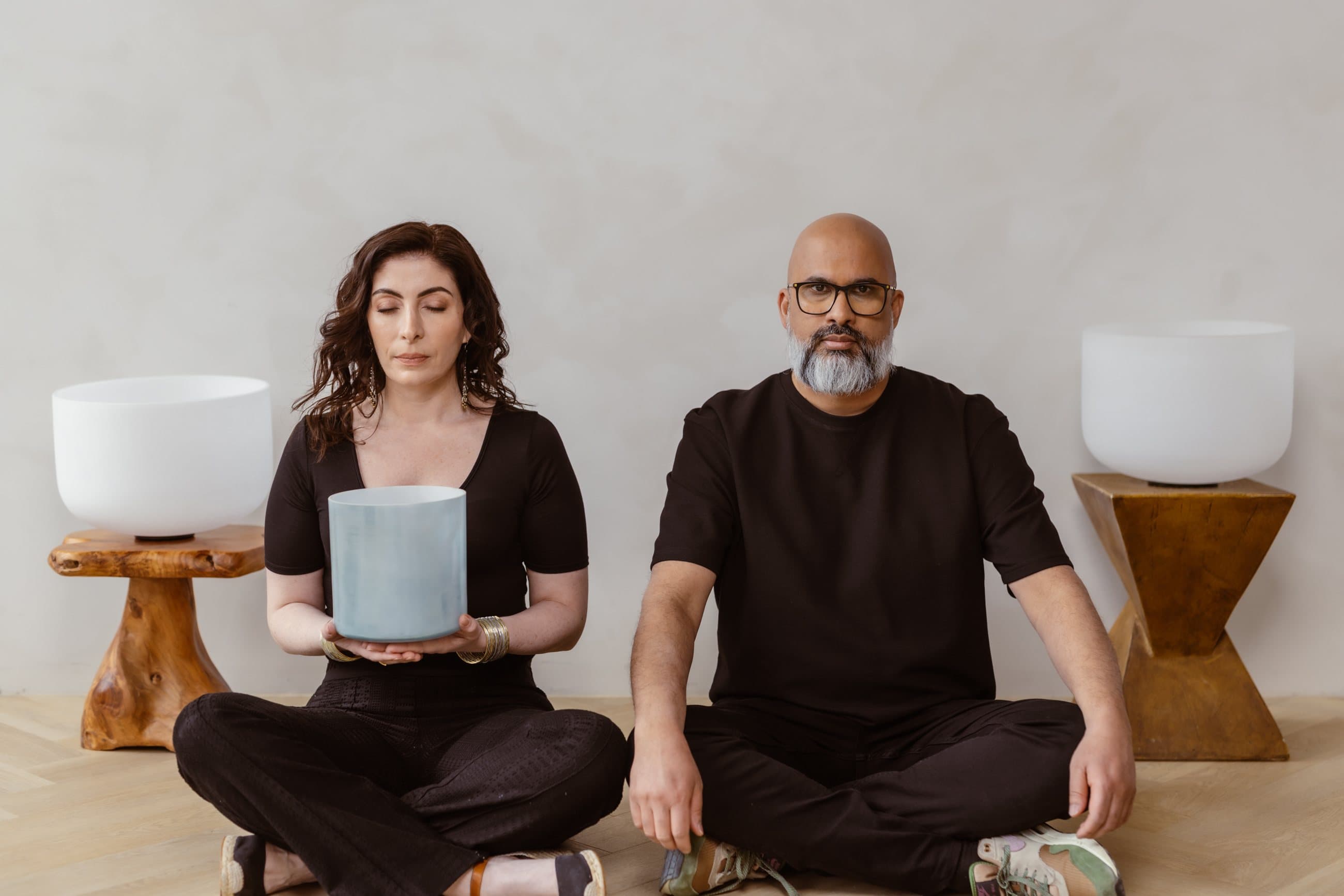
Meditation Club meets live on Zoom every Monday and Wednesday at 8:30 in the morning, Eastern, for half an hour, with a sound bath at the end. We have been doing it since March 2020, over 800 mornings. A busy mind finds it much easier to show up to something that starts at 8:30 whether you are ready or not, with people who notice when you are missing.
Also asked
- Is it normal for my mind to wander the whole time?
- Yes. Some mornings it will. Every time you notice and come back counts, so a mind that wanders a hundred times has done a hundred reps.
- How long before my mind gets quieter?
- It is different for everyone. What changes first is usually not the noise but how quickly you notice it and come back. Start with a few minutes, a few times a week.
- Can I meditate lying down?
- Yes. Some of our members sit and some lie down. If lying down puts you to sleep, sit up for the first few minutes.
- Is it easier with music or in silence?
- Whichever settles you. For a lot of busy minds, sound helps, because a bowl tone gives your attention somewhere to rest. That is why our mornings end with a live sound bath.